
Top AI Video Tools in 2026: Generators, Upscalers and Smart Editors
A working creator's survey of AI video in 2026 — text-to-video generators, upscalers, auto-editors, captioning and dubbing tools, and what's hype versus useful.

Originally published on Streaming Tools by Noah Bergman. Read on the original site
Two years ago, "AI video" mostly meant impressive demo reels and unusable products. In 2026, the landscape has split cleanly in two: a set of tools that have quietly become essential parts of working creators' pipelines, and a louder set that still burns more time than it saves. If you make video for a living — or want to — knowing which is which matters more than knowing every product name.
This survey covers the full landscape: text-to-video generation, AI upscaling and frame interpolation, auto-editing and long-to-short repurposing, captioning and dubbing, background removal, the ethics and disclosure questions you can no longer ignore, and practical workflows that chain these tools together. Throughout, I'll be blunt about what actually earns its subscription fee.
Text-to-Video Generators: Impressive, Specific, and Still Not Magic
The frontier models — OpenAI's Sora line, Google's Veo 3.x, Runway's Gen-4, Kling, and Luma's Dream Machine — can now produce ten-to-thirty-second clips with coherent physics, consistent characters across shots, and synchronized ambient audio. That is a genuine leap from the melting hands era. What they still cannot reliably do is follow a director's intent precisely: getting exactly the shot you storyboarded frequently takes dozens of generations, and multi-shot narrative consistency remains fragile beyond short sequences.
Where generators genuinely earn their keep today:
- B-roll and establishing shots. Need five seconds of "aerial coastline at dusk" or "rain on a window, shallow focus"? Generation is now faster and cheaper than stock-footage hunting, and it's exactly your aspect ratio and duration.
- Concept previsualization. Pitching a video idea, an ad, or a title sequence with a generated animatic beats a text description every time.
- Motion backgrounds and loops for stream overlays, intros, and lyric videos.
- Stylized inserts — dream sequences, hypotheticals, historical recreations — where a slightly uncanny look is acceptable or even desirable.
Where they still lose to a camera: anything featuring you, your product, real locations, sustained dialogue scenes, and any content whose value is authenticity. Audiences in 2026 have developed sharp eyes for generated footage, and passing it off as real is both increasingly detectable and increasingly penalized by platforms.
Cost reality check: usable-quality generation is credit-metered, and iterating toward a specific shot can cost real money. Budget for experimentation, not just final renders.
AI Upscaling and Frame Interpolation: The Quiet Workhorses
While generators get the headlines, enhancement tools deliver the most reliable value per dollar in the whole AI video category.
- Topaz Video AI remains the reference for local upscaling — turning 720p archive footage into passable 4K, denoising old camera footage, and deinterlacing legacy material. Its motion-aware models handle live-action best; expect long render times without a strong GPU.
- NVIDIA's RTX Video features (Super Resolution and SDR-to-HDR) upgrade playback in real time, and DLSS-style upscaling has bled into streaming workflows — some creators stream at lower internal resolutions and let enhancement handle the rest.
- Frame interpolation (Topaz, Flowframes and successors) converts 30 fps to 60+ fps convincingly for gameplay, sports, and smooth slow-motion. It struggles with fast occlusions — hands crossing faces, confetti, rain — where warping artifacts creep in.
Practical guidance: upscaling shines on good footage at low resolution (an old but well-lit interview) and disappoints on bad footage (compression-smashed, out-of-focus clips). AI cannot recover detail that was never captured; it hallucinates plausible detail, which works until it doesn't — be careful with faces and on-screen text.
Auto-Editing and Repurposing: Long-Form to Shorts, Automated
If one AI category has changed creator economics most since 2024, it's repurposing. Tools like Opus Clip, Klap, Vizard, and Eklipse ingest a long stream VOD or podcast and output ranked, captioned, vertically-reframed short clips — with speaker tracking that keeps faces centered and hook-detection that finds the moments most likely to retain viewers.
The honest assessment from heavy use:
- The good ones find real moments. Hook detection has become genuinely competent; the top-ranked clips are usually ones a human editor would also have picked.
- Auto-reframing works for talking heads, and fails often enough on gameplay-plus-facecam layouts that you'll want templates configured per content type.
- Publish rates matter more than perfection. Creators who post six "85% as good as hand-edited" clips per week outperform those who hand-craft one. That is the entire business case.
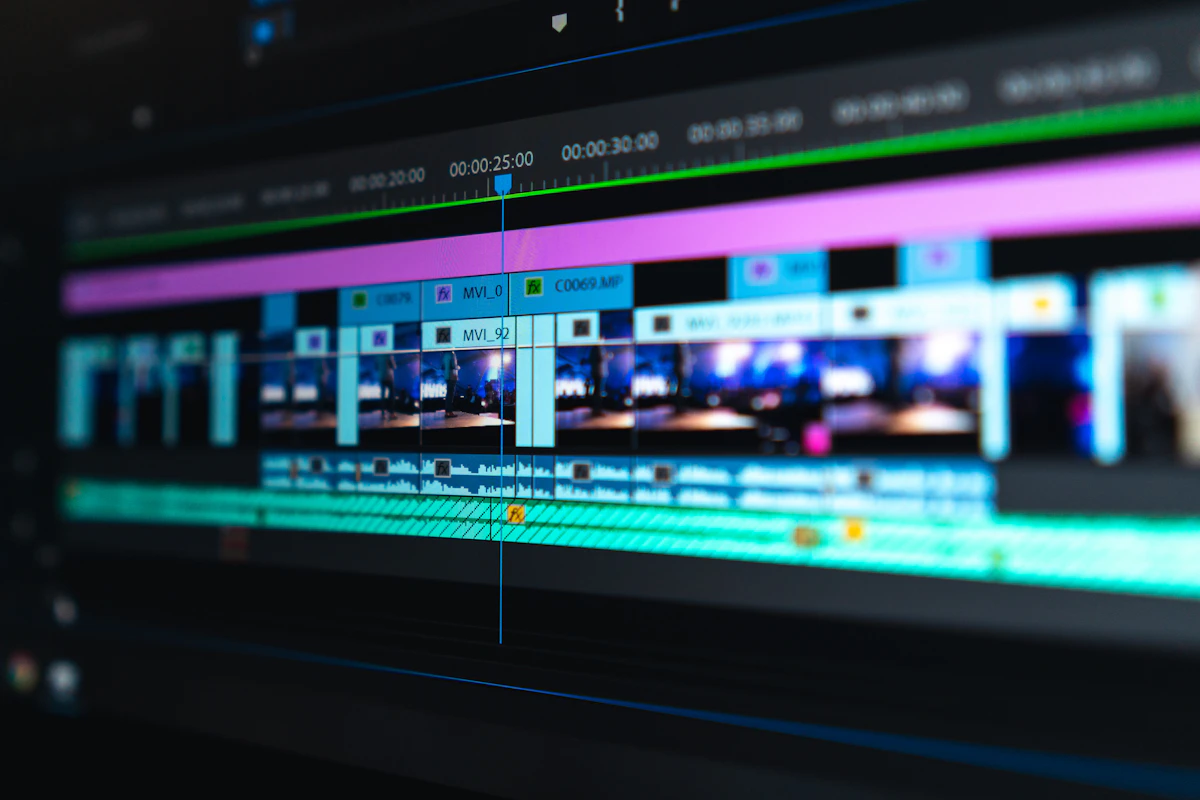
- Descript deserves special mention as the editor where text is the timeline — cut a rambling recording by deleting sentences from the transcript, remove filler words in one click, and fix a flubbed line with voice cloning. For talk-heavy content it has replaced traditional NLEs for many creators.
Meanwhile, traditional editors absorbed the same capabilities: Premiere Pro's text-based editing and generative extend, DaVinci Resolve's Neural Engine tools (magic masks, speed warp, voice isolation), and CapCut's ever-expanding auto-everything pipeline mean you may already own more AI editing than you use.
Captioning and Dubbing: Solved and Nearly-Solved
Captioning is effectively solved. Whisper-class speech recognition — built into everything from Premiere to CapCut to free CLI tools — delivers accuracy that needs only a quick human pass for names and jargon. Styled, animated captions (the karaoke-highlight look) are one click in most short-form tools. There is no longer any excuse for uncaptioned content, and since the majority of short-form viewing happens muted, captions are retention infrastructure, not accessibility garnish.
Dubbing has crossed the usefulness threshold. ElevenLabs, HeyGen, and YouTube's built-in auto-dubbing can now translate your video into major languages in a voice that resembles yours, with lip-sync adjustment on the premium tiers. Creators with tutorial or entertainment content report meaningful audience growth from Spanish, Portuguese, Hindi, and Japanese dubs. Quality varies by language pair, and idioms still land oddly — review before publishing, especially for humor.
Background Removal and Virtual Production Lite
AI segmentation killed the green screen for most streaming use cases. NVIDIA Broadcast, XSplit VCam, and the background-removal built into OBS plugins and video calls cut you out convincingly in decent lighting — hair edges and fast movement are the remaining tells. For recorded video, Resolve's Magic Mask and runway-style rotoscoping tools turn what used to be hours of manual roto into minutes of cleanup. If you stream with a clean setup and a key light, a physical green screen is now optional rather than essential.
What's Hype vs. Actually Useful in 2026
| Category | Verdict | Notes |
|---|---|---|
| AI captioning | Essential | Solved problem; use it on everything |
| Long-to-short repurposing | Essential for streamers | Human review of top clips still advised |
| Upscaling/interpolation | Reliably useful | Best on good-but-old footage |
| Text-based editing | Reliably useful | Transformative for talk content |
| AI dubbing | Useful, emerging | Review output; big upside for tutorials |
| Background removal | Useful | Lighting still matters |
| Text-to-video B-roll | Situationally useful | Budget for iteration |
| Full AI-generated videos | Mostly hype | Audiences detect and discount it |
| "AI avatar presenter" channels | Mostly hype | Platforms demote synthetic-presenter spam |
| One-click "AI makes your video" apps | Hype | Generic output, no editorial judgment |
Ethics and Disclosure: The Part You Can't Skip Anymore
The rules tightened while the tools improved, and working creators need to internalize three realities:
- Platform disclosure is mandatory for realistic synthetic content. YouTube requires flagging realistic AI-generated or altered material, and TikTok both requires labeling and auto-labels content carrying C2PA content credentials. Failing to disclose risks removal and strikes; the checkbox costs nothing.
- Voice and likeness rights are enforceable. Cloning a voice that isn't yours (or your explicit-permission collaborator's) is a legal minefield — the wave of statutes following Tennessee's ELVIS Act and the EU AI Act's transparency provisions has real teeth in 2026. Clone your own voice freely; touch no one else's.
- Your audience is the ultimate regulator. Viewers accept AI captions, dubs, and B-roll without blinking. They punish deception — fake "footage," synthetic personalities presented as real, and AI-padded content farms. Disclosure done casually ("B-roll generated with Veo") reads as competence, not confession.
Watermarking and provenance standards (C2PA content credentials) are increasingly embedded by default in generator output, so assume anything you generate is identifiable as generated. Build your workflow accordingly.
Practical Workflows That Chain Tools Together
The compounding wins come from pipelines, not single tools. Three that work today:
The Streamer's Repurposing Pipeline
Stream on Twitch or YouTube → VOD auto-ingested by Opus Clip or Eklipse → top five clips reviewed, captions spot-checked → vertical clips scheduled to TikTok, Shorts, and Reels → best-performing clip themes inform next stream's content. Time cost after setup: under an hour per week.
The Tutorial Creator's Globalization Pipeline
Record screen tutorial → edit by transcript in Descript (filler words removed automatically) → captions styled and exported → ElevenLabs or YouTube auto-dub into three target languages → thumbnail variants tested. One recording becomes four language markets.
The Archive Revival Pipeline
Old 720p content → Topaz upscale to 1080p/4K with denoise → re-caption with Whisper → repackage as "remastered" library content or compilation source. Channels with deep back catalogs are quietly mining years of footage this way.
FAQ
Which single AI video tool should a small creator buy first?
A repurposing tool if you stream or record long-form (Opus Clip-class), or Descript if your content is talk-driven. Both pay for themselves in saved hours within the first month of consistent use.
Will AI-generated videos hurt my channel's reach?
Undisclosed realistic synthetic content risks strikes, and low-effort AI spam is actively demoted on major platforms. Disclosed, purposeful use — B-roll, dubs, captions — carries no penalty and is now standard practice.
Do I need a powerful GPU for these tools?
Only for local processing: Topaz upscaling, local Whisper transcription, and OBS AI filters benefit hugely from a modern GPU. Cloud tools (generators, repurposers, dubbing) run anywhere but meter you by credits instead.
Is it worth learning traditional editing if AI does so much?
Yes — more than ever. AI executes; it doesn't decide. Pacing, story structure, and taste are what differentiate creators when everyone has the same automation. The tools raise the floor; editorial judgment still sets the ceiling.
The pattern across every category is consistent: AI video tools in 2026 are force multipliers for people who already know what they're making, and expensive distractions for people hoping the tool will decide for them. Automate the mechanical, keep the editorial, disclose the synthetic — and you'll capture the real gains while the hype cycle churns on without you.
Originally published on Streaming Tools by Noah Bergman. Read on the original site


